

Industries / FinTech
Cloud Security Health Check for FinTech & financial services
You hold bank-grade data with a startup-sized attack surface. Get posture evidence that survives buyer questionnaires, insurers, and board questions — without hiring a full security org first.
What teams in this industry struggle with
Why a health check is worth the time
What we treat as crown jewels: customer account data, payment flows, transaction records, and underwriting models
What we prioritize for FinTech
Same five domains — weighted to your risk
We still assess identity, data, network, logging, and configuration. For FinTech, we put extra weight on the paths that lead to your most sensitive systems and the controls your auditors will ask about.
Identity & access
Over-privileged roles, long-lived keys, missing MFA, and third-party trust — the #1 path into financial cloud estates.
Data & payment-adjacent stores
Public buckets, unencrypted stores, and where customer or payment data actually lives across accounts.
Network & edge exposure
Open management paths, overly broad security groups, and segmentation gaps between environments.
Logging & evidence
Whether you could reconstruct an incident and satisfy auditors and cyber insurers with trail integrity.
Configuration drift
CIS and provider baseline drift across every account, project, and tenant in scope.
Findings are mapped to frameworks your industry actually answers to, including GLBA, PCI-DSS, SOX, FFIEC, NYDFS 500 , and more when they apply.
Questions worth asking yourself
If you cannot answer these cleanly, start here
- If we scanned your cloud accounts right now, what do you think we would find?
- When was the last time someone outside your team looked at how your cloud is actually set up?
- How much of your week is spent on questionnaires instead of reducing real exposure?
Before we begin
What to have ready
- Identify cloud accounts, subscriptions, or projects in scope
- Prepare read-only access (no agents, no production changes)
- List industries, regions, and frameworks that matter for your buyers and regulators
- Name a technical contact for the scoping call
- Optional: note marketplace subscription if you already purchase via AWS
What you walk away with
Assessment, then a plan you can execute
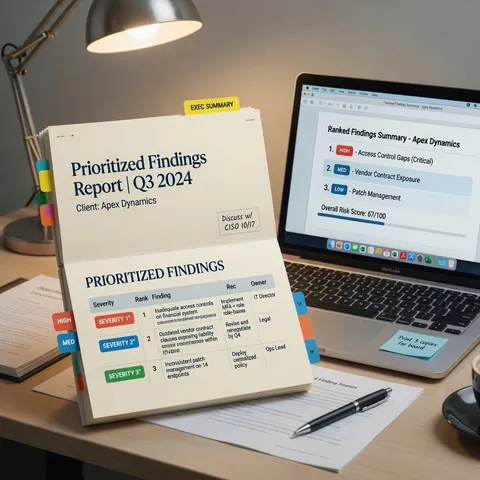
- 1. Ranked findings. A clear list of what is exposed, ordered by real risk — not a raw scanner dump.
- 2. Framework context. Each finding tied to the controls and evidence your auditors, partners, or insurers care about.
- 3. A path forward. You get a prioritized findings report mapped to CIS, NIST CSF, ISO 27001, and your industry controls. You get a remediation roadmap ordered by risk reduction — what to fix first, and why. Optional deeper work when you need it: Kubernetes, data posture, CNAPP enablement, AI governance. Optional re-checks later so you can prove the score moved.
A health check finds and prioritizes real exposure. It is not a certification or a promise you will never be breached — closing the findings is what changes your risk.
FAQ
FinTech questions
We already have a cloud team — why a health check?
Most FinTechs do. The question is whether that team is also security, compliance, and architecture. A read-only health check returns hours they would otherwise spend on baseline assessment and framework mapping — without replacing them.
Isn’t AWS / Azure / GCP handling security?
They secure their infrastructure. Shared responsibility means IAM, data access, network config, and logging above that layer are yours. Misconfigurations — not zero-days — drive most cloud incidents.
We just passed SOC 2.
SOC 2 is a snapshot. Cloud environments change continuously. A health check answers what changed between your last audit and today — and maps findings to the frameworks buyers and insurers still ask about.
What happens after the report?
You decide. Many teams fix the top items themselves. Others ask us to run a remediation sprint, dig into Kubernetes or data posture, or set a lighter re-check cadence so findings do not go stale. We partner on the work — we do not sell with fear.
Get a FinTech health check scoped to your cloud
Tell us your footprint. We come back with a clear quote, a read-only assessment plan, and a date that works. Prefer buying through AWS Marketplace? We can meet you there too — same work either way.
By Kief Studio · in partnership with JDR Security Solutions
In FinTech environments
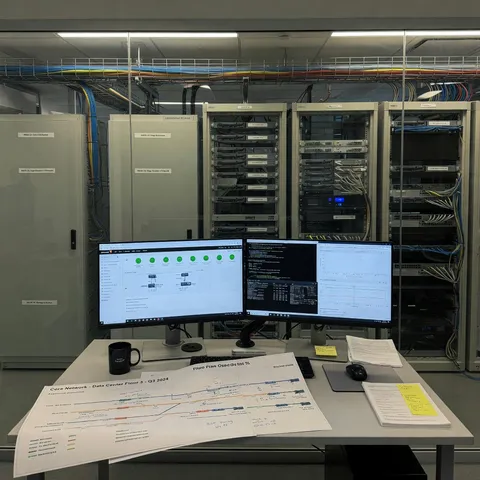
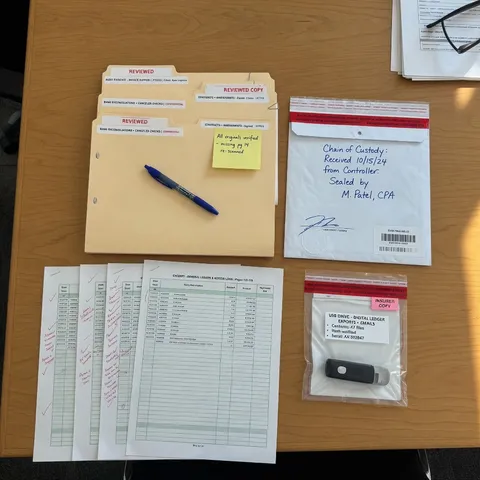
Where FinTech teams actually work
The same read-only assessment, with findings weighted to what your industry is measured on.

Continue
Next steps for FinTech teams
Free check, full engagement, frameworks, and method.

Free readiness check
Ten questions. Instant picture of where you are thin. No cloud passwords.
Start free
Request a full health check
Tell us your clouds and footprint. We come back with a scoped quote.
Request now
Framework mapping
CIS, NIST CSF, SOC 2, HIPAA, PCI, and regional privacy overlays.
View frameworks
Identity & access
Over-privileged roles, stale keys, missing MFA — the #1 breach path.
How we assess IAM
Data & storage
Public buckets, encryption, and where crown-jewel data actually lives.
How we assess data
How an engagement runs
Request → clear quote → read-only assessment → walkthrough → fix path.
See the steps